The Art of the Tea Ceremony
The Japanese tea ceremony, known as...
Chado or Sado, is a profound cultural ritual centered on the preparation and service of matcha green tea. Rooted in Zen Buddhism, this practice is far more than just drinking a beverage; it is a meditative performance that emphasizes four key pillars: harmony, respect, purity, and tranquility. Every movement, from the way the host cleanses the tea utensils to the specific manner in which the bowl is rotated before drinking, is choreographed with extreme precision. The ceremony often takes place in a minimalist tea house surrounded by a serene garden, designed to detach guests from the mundane worries of the world. By focusing on the present moment and the beauty of simplicity, Chado serves as a spiritual path that celebrates the ephemeral nature of life and the deep bond between host and guest.
The Spirit of Bushido and the Samurai
The legacy of the Samurai remains one of the most enduring symbols of Japanese history, defined by...
The strict ethical code known as Bushido, or "the way of the warrior." This system of values prioritized honor, courage, benevolence, and extreme loyalty to one's master above all else, even life itself. While the Samurai were elite martial artists skilled in swordsmanship and archery, they were also expected to be well-versed in literacy, calligraphy, and poetry, embodying the ideal of the "clothed-in-steel" scholar. Today, the influence of Bushido persists in modern Japanese society, manifesting in a strong sense of personal responsibility, social discipline, and the pursuit of perfection in one's craft. The iconic katana is still revered not just as a weapon, but as a spiritual vessel representing the soul of the warrior.
Omotenashi: The Philosophy of Hospitality
In Japan, the concept of hospitality is encapsulated by the word...
Omotenashi, which translates to "wholehearted service." Unlike Western service models that often expect a tip in exchange for good performance, Omotenashi is entirely selfless, practiced without the expectation of any reward. It involves a deep level of empathy where the host anticipates the guest's needs before they are even expressed. Whether you are staying at a traditional ryokan (inn) or shopping at a high-end department store, this philosophy ensures a seamless and welcoming experience. This dedication to care is rooted in the belief that every encounter is a "once-in-a-lifetime" opportunity (ichi-go ichi-e), requiring the host to provide the best possible environment and treatment to honor the transience of the moment.
Matsuri: The Vibrant Traditions of Festivals
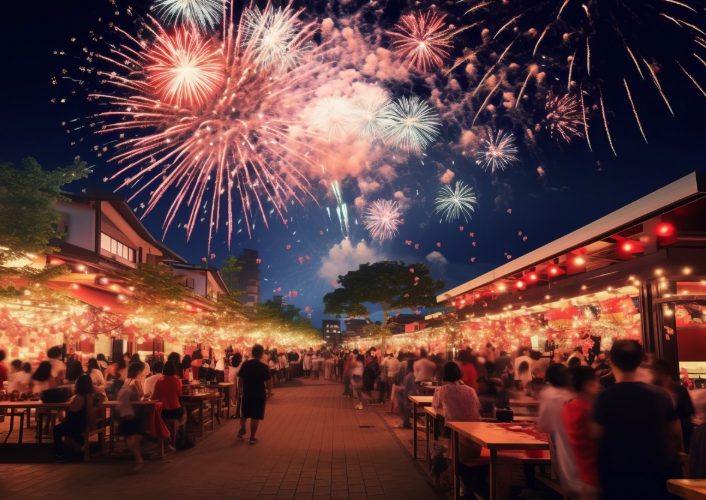
Japanese festivals, or matsuri, are energetic, colorful events that serve as essential...
Community gatherings to honor local deities (kami) or mark the changing of seasons. Most matsuri are sponsored by local shrines or temples and feature the mikoshi, a divine palanquin believed to house a god, which is paraded through the streets on the shoulders of chanting participants. These celebrations are a sensory explosion of traditional music, rhythmic taiko drumming, and street food stalls offering treats like takoyaki and yakisoba. Beyond the spectacle, matsuri play a vital role in maintaining social cohesion and connecting modern urbanites with their ancestral roots. From the massive floats of the Gion Matsuri in Kyoto to the quiet beauty of the Obon lantern festivals, these events showcase the enduring vitality of Japan’s folk traditions and spiritual life.